

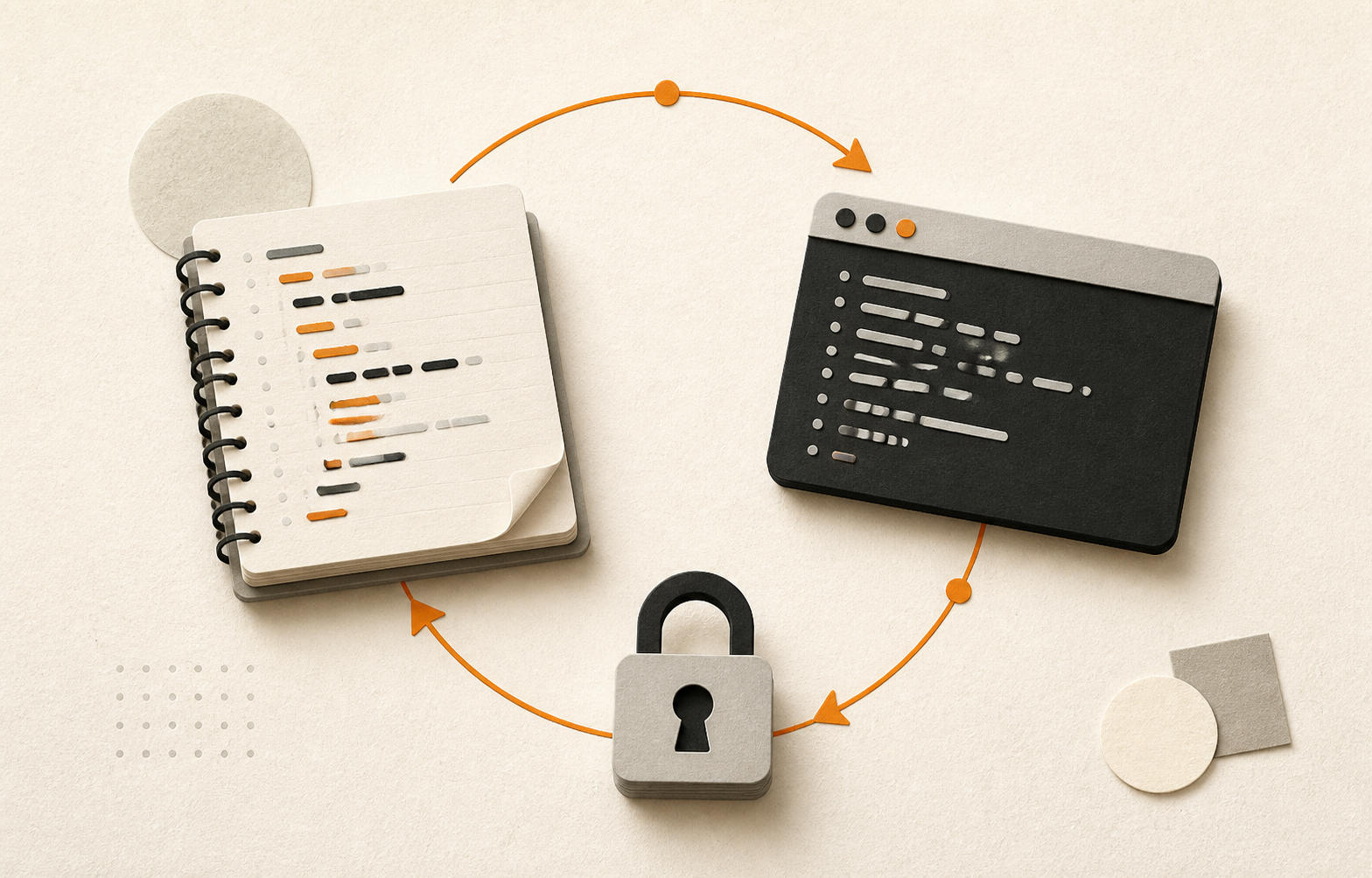
The best learning notes are not just summaries. They are proof that you can move from concept to experiment to explanation.
For programming and cybersecurity, a useful learning loop looks like this:
- Pick one narrow question.
- Build the smallest experiment that answers it.
- Write down what happened, including what failed.
- Turn the result into a reusable note, checklist, or project improvement.
Example
Instead of studying authentication as a broad topic, choose one question: how should an application store sessions and protect routes?
That question can become a small implementation note:
- What data model is needed for users, accounts, and sessions?
- Which secrets are required locally and in production?
- What should happen when a user signs out?
- Which routes should be public, private, or unlisted?
By the end, the note is both a learning artifact and portfolio evidence. It shows how you reason, not only what technologies you have seen.
A Simple Template
Use this structure for future posts:
- Problem: what you wanted to understand.
- Experiment: what you built or tested.
- Result: what worked, what failed, and what changed.
- Takeaway: what you would do again in a real project.
Small loops compound quickly. A few careful posts can show much more than a long list of tools.